This year, we had the pleasure to attend GPeC SUMMIT 2025, one of the go-to events for e-commerce and digital marketing in CEE.
We are Oana & Ioana and in case you missed it…
We are on a mission: to report back 🫡 .
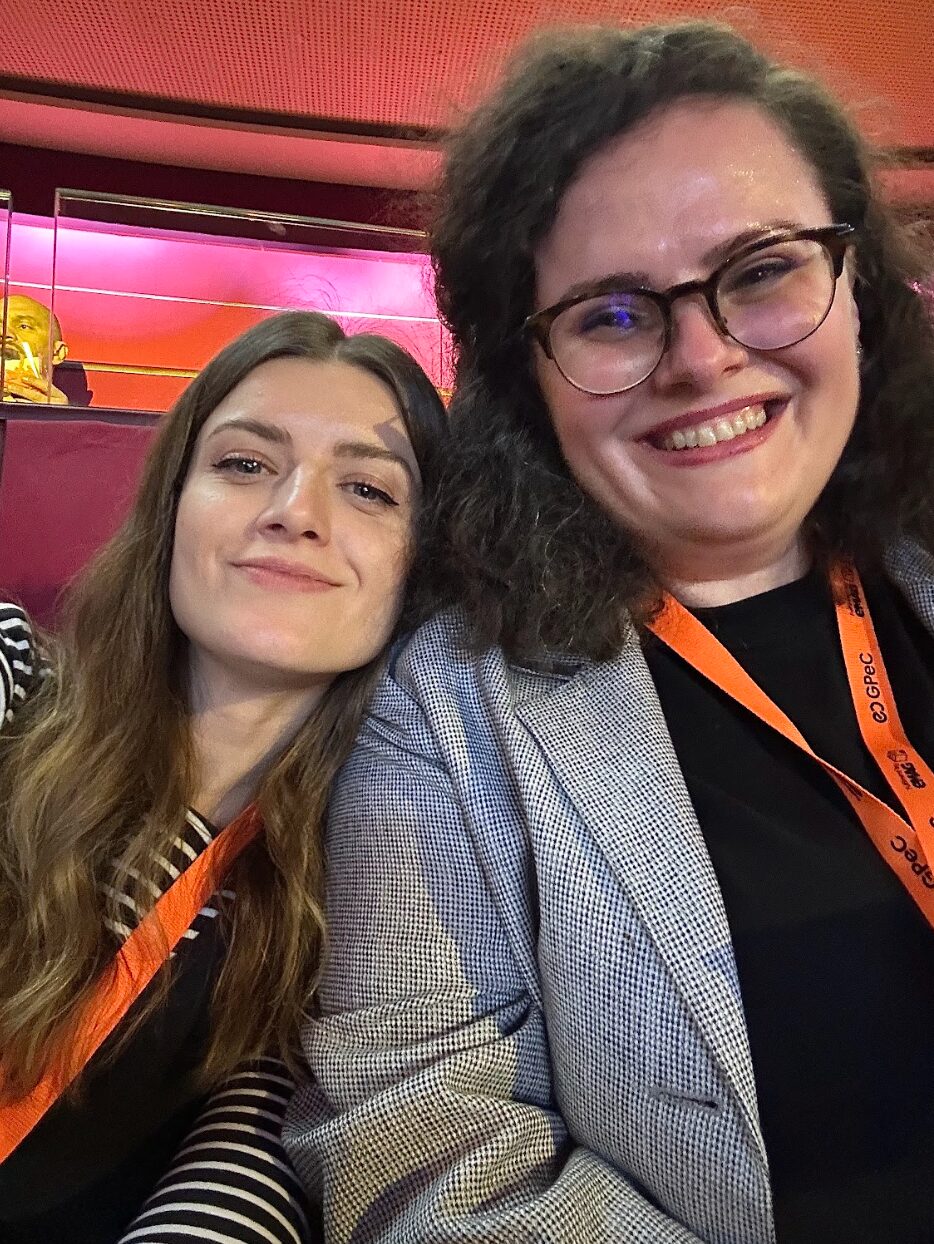 The talks were sharp. The crowd was sharp, too. And yes, there was just enough coffee to keep everyone thinking straight. No empty buzzwords. No inflated promises. Just practical ideas from people who actually enjoy what they do.
We had with questions. About the platforms people are using, the sales numbers behind the scenes, the trends worth tracking. Mostly, we wanted to take the pulse of the market and to get inspired by the work others are doing.
Now that we’re back at our desks, we’ve got a few talks we can’t stop thinking about and a few ideas worth sharing.
AI for better UX, copywriting and B2B lead generation – Andy Crestodina
AI = Average Information (if not used to the full potential, of course)
A central theme of Andy Crestodina’s talk was moving beyond using AI only for speed and efficiency. Instead, he advocated for using AI to drive performance and quality, ensuring that the technology serves as a tool for deeper insights and more meaningful engagement with potential leads.
He shared practical tips and tricks on how to write better AI prompts and how to use AI itself to improve those prompts. Using real case studies, he demonstrated how different inputs lead to different outcomes depending on how you phrase your requests.
Ideas that stuck
- Strong opinions: create a provocative but mundane topic prompt to start conversations
People love having strong opinions. Even about the small stuff. What are some oddly specific opinions in your industry that spark debate or eye-rolls? Use those to start conversations. Think like Andy: take something mundane and make it provocative.
This works because:
- It’s unexpected (passionate opinions about boring things).
- It invites insider identity (you know you’re in the field if you care).
- It’s low-stakes but leads to storytelling, war stories, and laughs.
- Customize the AI tool you use by adding negative keywords or expressions lists
You know what he means. You are scrolling through Linkedin, and there you see it: “Unleash the potential of your business”, or “In a rapidly evolving landscape…”, or “Uncover cutting-edge technology”.
Let’s be real: what human being actually talks like that?
Andy’s advice? Make a list of words or phrases you would never use. Customize the settings by adding the negative lists and/or expressions.
- Write your prompt and ask the AI tool to rewrite it
Writing your own prompt and then asking an AI tool to rewrite it is like brainstorming with a supercharged editor who doesn’t sleep or take coffee breaks. What Andy showed was side by side comparisons of the search outcome: by using the initial prompt and by using the revised prompt. The quality of the responses was indeed higher.
Mark Schaefer’s talk: how humans win in an AI marketing world
The future isn’t about quietly letting AI take over. The future it’s about doubling down on what only humans can bring to the table. Competence? That’s baseline stuff, and frankly, it’s easy to replicate.
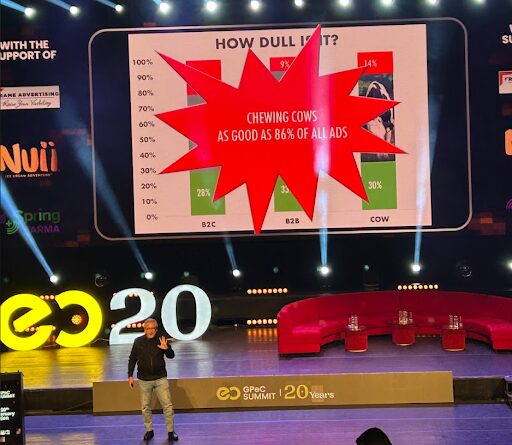
What was Mark Schaefer saying? That a video of chewing cows is as good as 86% of all ads. Business usually rewards dull. Because it’s the safe choice.
The bots are here. But we still own CRAZY.
It’s the audacious mindset that is setting us apart from AI. The willingness to be bold, to take risks, and own our unique “crazy”. The guts to take risks. The instinct to go left when everyone else turns right. The power to own our unique, unapologetic crazy.
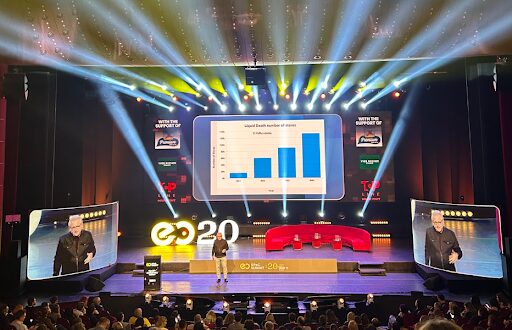
Mark Schaefer presented the case study of the brand Liquid Death. They didn’t whisper about purity or mountain springs. They screamed “Murder Your Thirst” with skulls, and heavy-metal branding. They took negative comments and turned them into viral campaigns. Basically, they made a $1.4 billion movement out of canned water. How cool is that?
Mike’s King presentation: the end of SEO as we know it
Mike pointed out that it’s time to kill the cliché: “SEO is dead.” It’s not. It just isn’t what it used to be. As Mike laid it out in his GPeC talk, we’re watching the old rules being changed in real time. Google’s not sending traffic away anymore, it’s keeping it. With AI Overviews flooding the SERPs and search agents answering questions before users even click, your beautifully optimized blog post? Might never see the light of day.
And here’s the twist: search volume is actually up by 20% year over year. So where’s it all going? Nowhere. It’s just getting swallowed by Google itself. “Google is doing the Googling for you,” Mike said. That’s not a metaphor, but the new normal. The AI doesn’t need your website. It just wants your content.
A few takeaways:
- Clicks are cheap. Branding is everything.
Here’s where things get juicy: we’ve been worshipping at the altar of clicks for years, and it’s time to break the spell. Search has always been a branding channel, we’ve just been too busy chasing conversion rates to see it. Users don’t need to click to remember you. They see your name in the results, hear it from an AI, and boom: the brand impression is made.
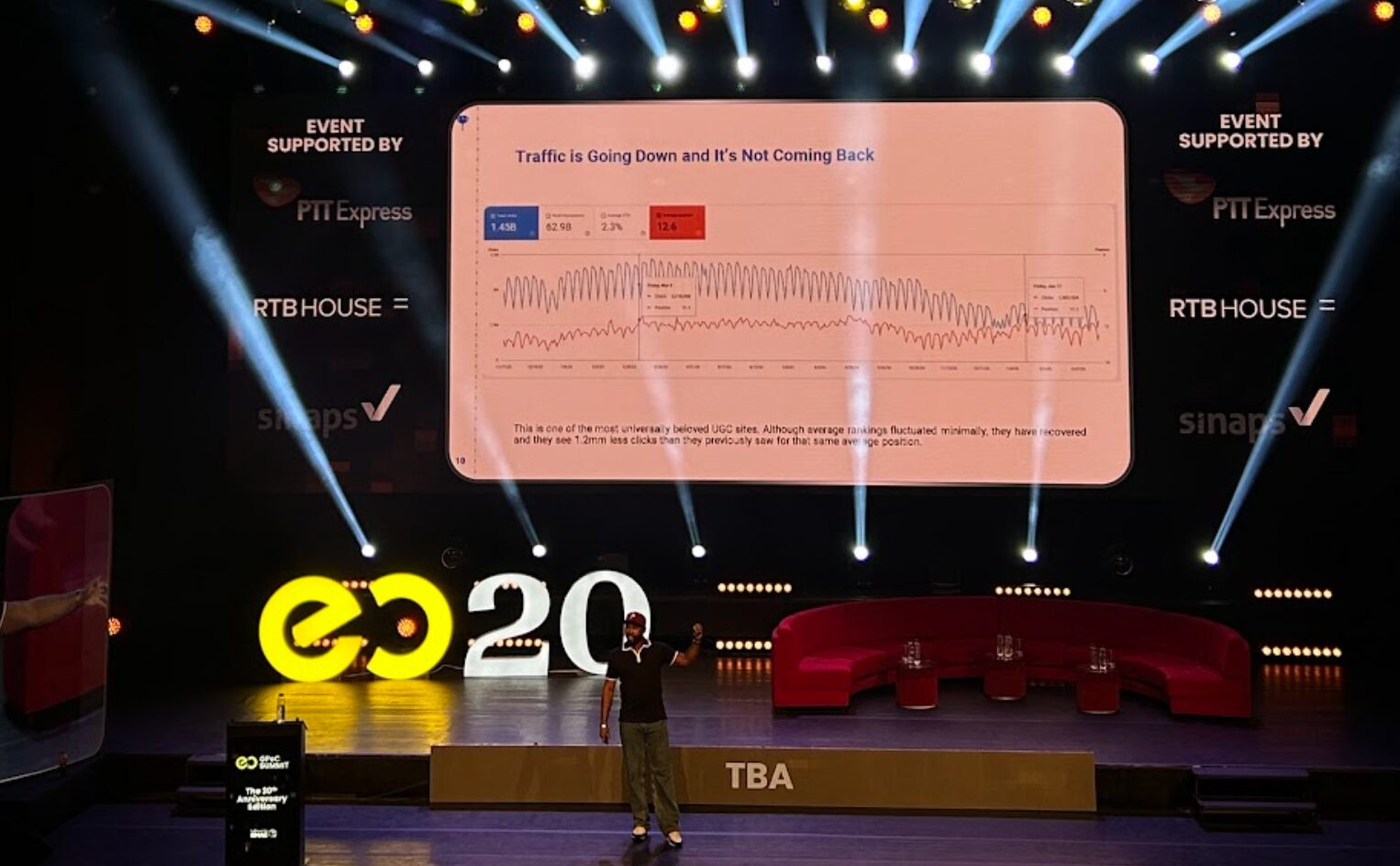
The smart move now? Track impressions. Watch for branded searches. Measure memory, not just traffic.
If your SEO strategy stops at clickthroughs, you’re already behind.
- We’re not SEOs anymore. We’re relevance engineers.
Our work sits at the messy, glorious intersection of AI, UX, digital PR, and content strategy. It’s not about keyword stuffing or page titles anymore. It’s about making sure your content survives in vector space models, LLMs, and whatever weird multimodal blender Google throws at us next.
- Structured data is the secret weapon
Bury key info in schema, it helps AI systems “see” and lift your content more easily. Gemini, ChatGPT, even Google’s own Overviews feed on structure.
- Cloaking is back. Not for Google, but for AI scrapers.
Given that large language models like ChatGPT operate outside of Google’s webmaster guidelines, Mike King suggested a potential, albeit controversial, application of cloaking techniques. This approach could be used strategically to shield valuable, original content from being scraped and incorporated into the training data of these AI models without permission or attribution.
That’s it from us, folks.
GPeC 2025 delivered: big brains, real talk, and ideas that actually stuck.
AI is changing the game, but the humans who know how to work it (or work around it) are still ahead. If there’s one thing we’re taking home, it’s this: be bold, be weird, and remember this: “we still own the CRAZY”.
